Sound familiar?Dynes
- The call
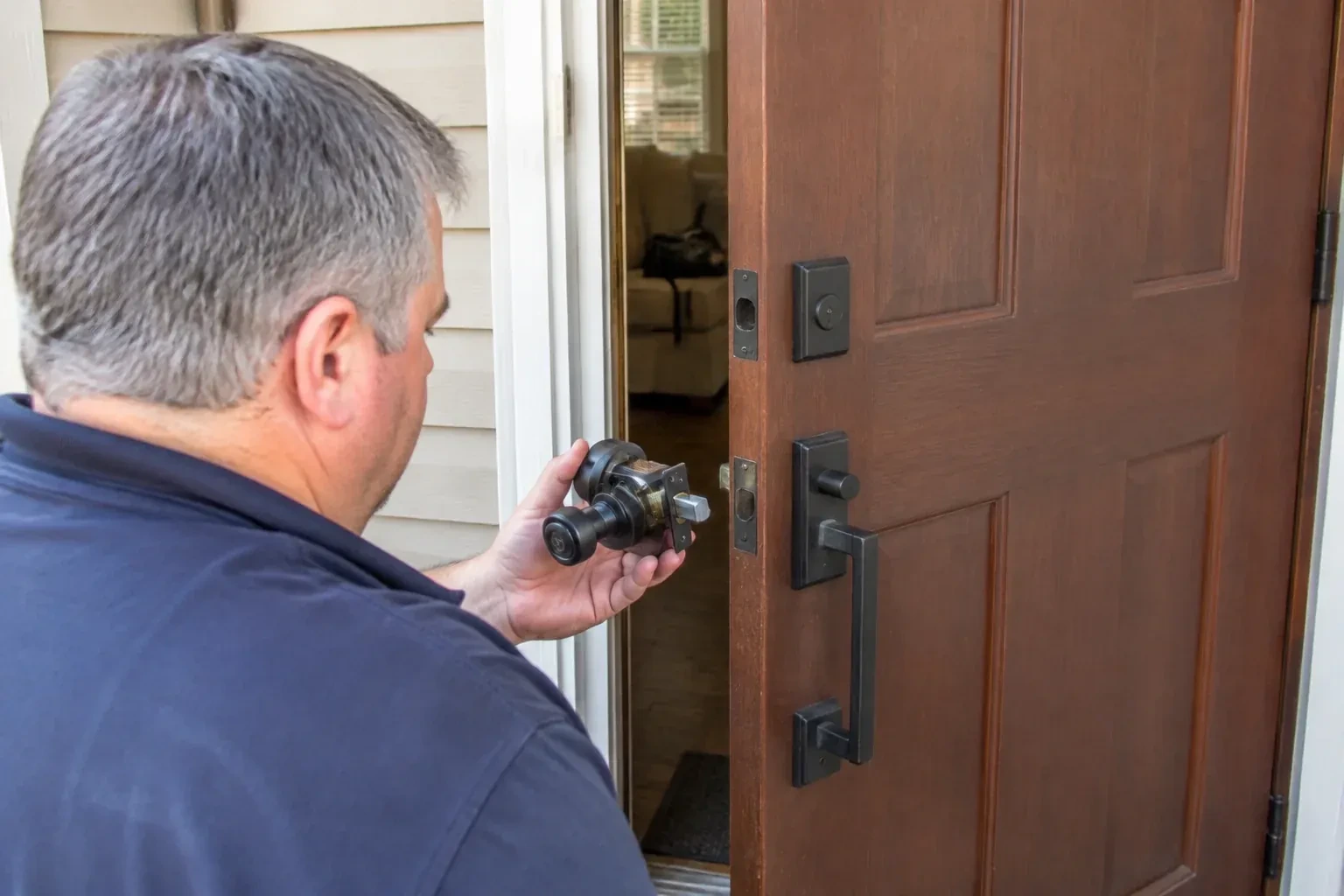
- You are inside, the deadbolt is thrown, and the thumb-turn will not budge. It moved a little last week with some effort. Now the door you walk through every day is a wall, and you need it open.
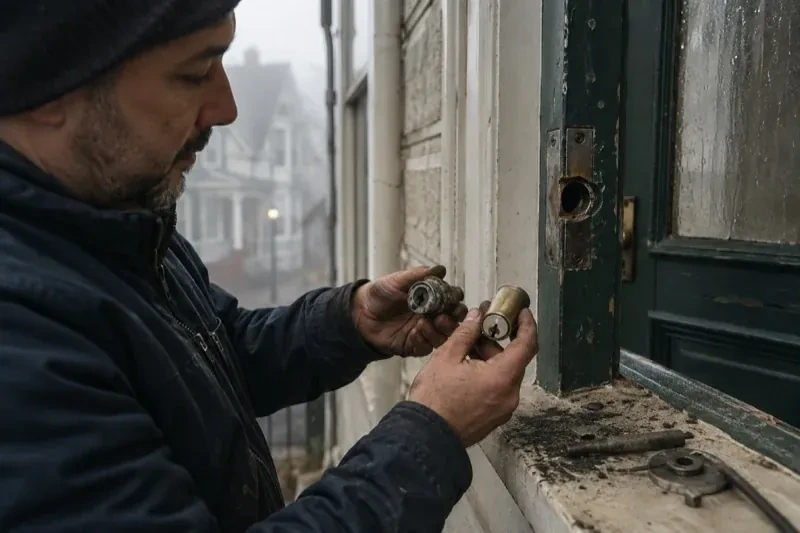
The shop's lever handle goes down as usual, but the latch inside the mortise case never pulls back. Staff are waiting on the sidewalk with their coffees, the door is locked, and the handle is simply moving air.
Many jammed locks are not lock problems at all. Wood doors swell in humid weather and shrink in dry winter air, hinges loosen and let the door drop, and a strike plate that was fine in spring is a few millimetres out by autumn. When that happens the bolt is squeezed in its pocket and the key cannot move it. The locksmith checks this first by loading the door in different directions while working the key, and by comparing how the lock behaves with the door open. If the door is the cause, the opening is gentle and the lasting fix is a hinge, strike or seal adjustment.
Sound familiar?Dynes
Seized & Jammed Lock Opening · Dynes
Scene 1
The frame side gets as much attention as the door side. The locksmith looks at where the bolt meets the strike plate: scuff marks on the plate's edge, a bolt pocket shallower than the roughly twenty-five millimetres a deadbolt needs, paint or filler that has crept into the pocket, and weatherstripping thick enough to hold the door proud of the frame. A dab of chalk on the bolt end shows exactly where it lands. These findings explain a lock that works with the door open and jams when it is shut, and they point to a chisel, a screwdriver and a strike adjustment rather than to anything inside the cylinder.
Scene 2
With access restored, a cylinder that seized gets a proper service. The locksmith removes it from the door, slides the plug out with a follower so the top pins and springs stay put, and lays out the pin stacks. Everything is cleaned, worn bottom pins and tired springs are replaced, and any burr on the plug is dressed. The plug is reassembled to the same combination so your existing keys keep working, then lubricated with the product that cylinder's maker specifies and cycled until it turns with a fingertip. If the key that jammed was worn, a fresh one is cut from the code rather than from that key.
Scene 3
You leave with a lock that operates the way it did when it was new: the key seats fully, the plug turns without a wiggle, the bolt throws and retracts through its whole travel, and the door closes and locks without a shoulder. The locksmith has cycled it from both sides and with every key, and has shown you where the trouble was, whether that was a gritty keyway, a broken tailpiece or a strike plate a few millimetres out. If you had a habit of lifting the door or pulling it toward you to lock it, that habit is now retired.
What shapes the quoteElizabeth Gardens Locksmith Pros
FeesSame any hour
In most cases, yes. A bolt held by the door is freed by relieving the pressure on the door. A cylinder clogged with grit or ice is cleaned and thawed until it turns. A failed tailpiece is bypassed and replaced. The lock stays on the door with its finish and your existing keys. A plug or shell that is worn, damaged, or eaten through by corrosion or earlier forcing is what has to be replaced, and that is explained before any work starts.
Often, and keeping the original hardware is usually worth trying first, since it fits the door and suits the house, though condition and the availability of matching parts decide whether a repair is realistic. The case comes out of the door edge, the decades of dust and hardened grease are cleaned away, a broken spring or worn hub is replaced with a matching part, and the contact surfaces get fresh grease. If a bit key or a cylinder has worn, a new key is cut or the cylinder rebuilt.
Better not, unless it is a proper dry lock lubricant. Household oils, general penetrating sprays and hinge silicone thicken inside the cylinder and attract grit, so they buy a day and cost a service later. If the lock is frozen, a lock de-icer is fine; boiling water is not, since it refreezes deeper in. The most useful thing to do while waiting is to stop turning the key, so it does not bend or snap.
HaltonOntario
Seized & Jammed Lock Opening · Burlington, Elizabeth Gardens, Longmoor, Orchard, Port Nelson, Roseland, Strathcona Gardens
Every square is one home in a hundred.
On-site assessment
The shop's lever handle goes down as usual, but the latch inside the mortise case never pulls back.
(289) 816-2265, open 24/7.
On-site assessment preferred · (289) 816-2265, open 24/7