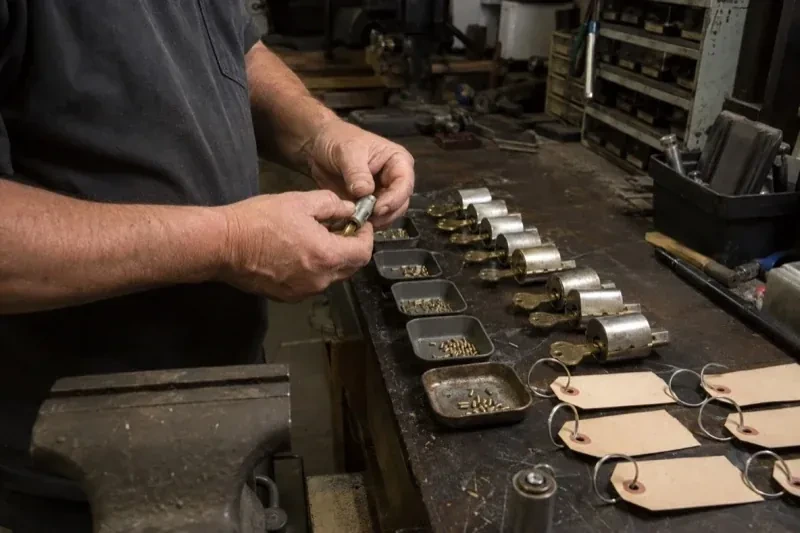
Sound familiar?Burlington
- The call
- The team has grown past the point where one shared key still makes sense. New hires need a way in before a manager arrives, and the current setup cannot tell one person's entry from another's.
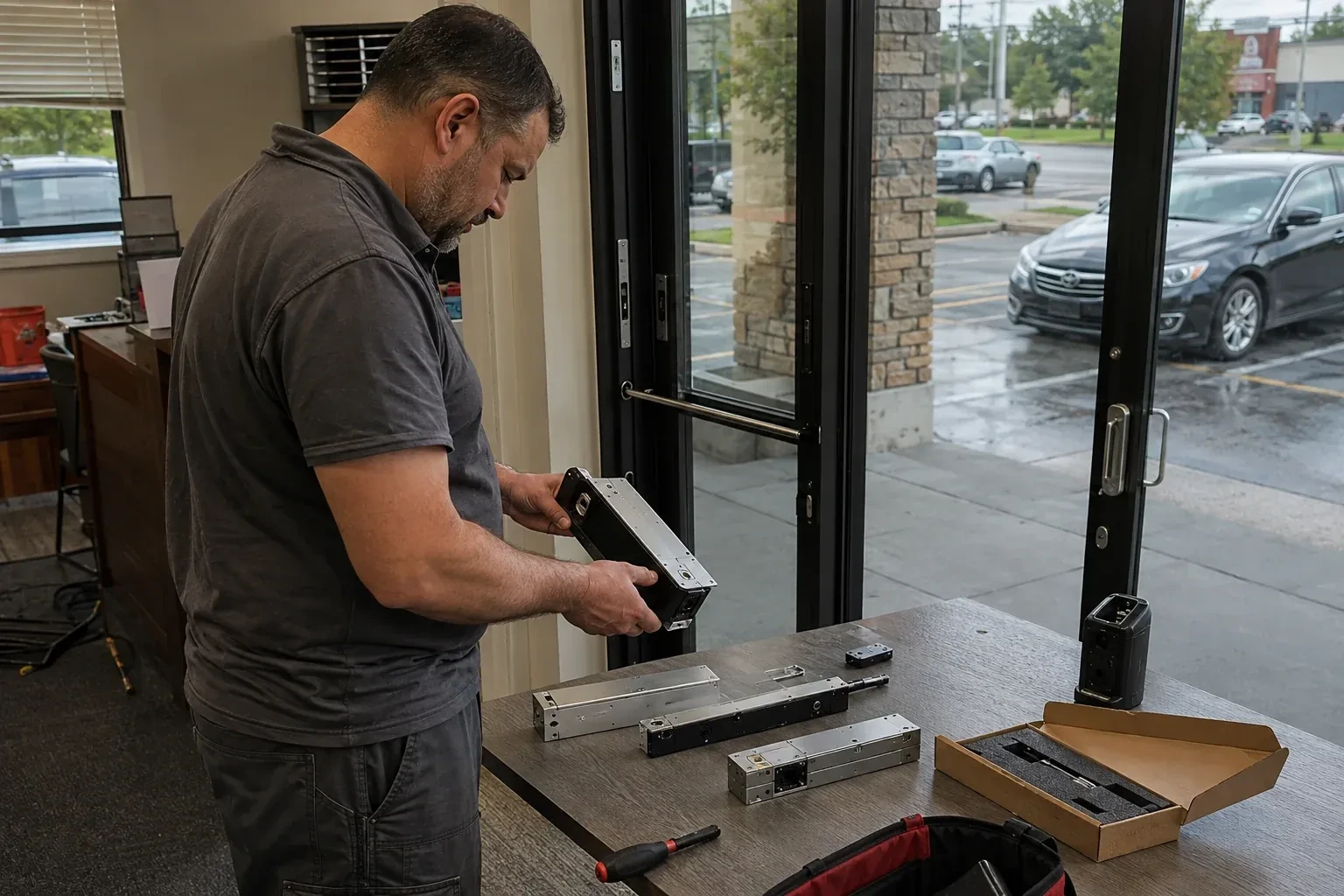
Another employee left and the keys never came back. You changed the locks again, cut copies for everyone who stayed, and paid for a job that repeats itself the next time someone quits, taking a working key out the door with them.
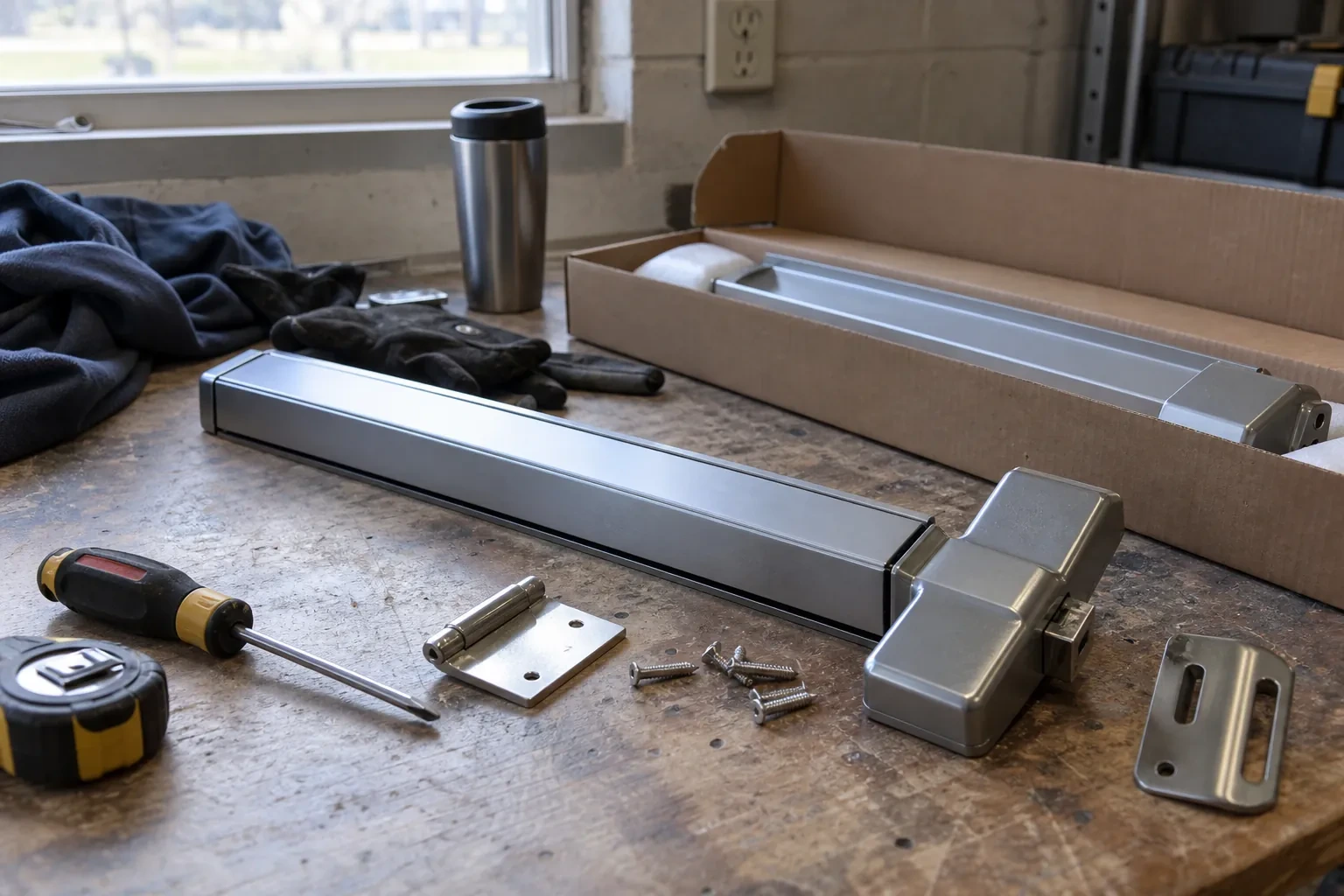
Locking hardware varies by opening: an electric strike, fitted into the existing frame, keeps the mechanical latch and releases it briefly for a valid credential; a magnetic lock clamps the door shut with an electromagnet and suits a frame or door that will not take a strike; and some openings use an electromechanical lock or a different controlled lockset entirely. Several of these can also be fitted with a mechanical override cylinder, so a lost signal, a dead battery, or a controller fault still leaves that particular door opening by key, though the option depends on the hardware chosen for it.
Sound familiar?Burlington
Access Control Installation · Burlington
Scene 1
Before any hardware is chosen, the locksmith sits down with whoever will administer the system afterward and works out what it actually needs to do: which doors deserve their own control, whose entry needs a record, whether one opening keeps different hours than another, and who should be able to add or remove a credential once the job is finished. This conversation shapes every choice that follows, from a single standalone keypad on one door to a networked controller running several openings on one schedule, and it is where the business, not the installer, sets the priorities the system is built around.
Scene 2
Each controlled opening can send and receive several signals: a reader reporting a presented credential, a lock output that releases the hardware, and, where the configuration calls for them, a door position switch reporting open or closed and a request-to-exit input. The locksmith runs the wiring from each opening back to wherever the controller is mounted — as a home run, along a shared bus, or over the network on an IP or PoE device — labels each conductor at both ends, and terminates them into the controller's input and output boards. A building with several openings may share one power supply and battery backup sized to the combined load, or split the load across more than one supply.
Scene 3
From the day the installation is finished, adding or removing a credential is a task the business handles itself, usually in minutes: a new hire is enrolled before their first shift, and someone who has left the company is switched off as soon as it is reported, rather than waiting for a lock to be changed. The administrator account holds this control, and whatever support or maintenance access the installer keeps beyond that is set out at handover rather than assumed either way. Most businesses find this the biggest day-to-day change from a mechanical key: entry stops being tied to a physical object that has to be tracked down and collected.
What shapes the quoteElizabeth Gardens Locksmith Pros
FeesSame any hour
A standalone unit is a self-contained reader and lock at one door, holding its own list of credentials, though it can still need a power or network connection to run. A networked system ties several doors to shared management, sometimes through more than one controller, aggregating schedules and combining logs across all of them. The right choice depends on how many doors need controlling and whether the business wants a single place to manage all of them, rather than one being universally better.
Yes. A system installed with some spare capacity in its controller and power supply can usually take another door or two by adding a reader and lock and wiring it back in. A door far from the existing wiring can instead run its own standalone unit. Either way, existing schedules and credentials do not need to be rebuilt from scratch.
Not always — it depends on the hardware chosen for that door. Where a mechanical override cylinder is fitted and keyed in, it can still be opened by key regardless of what happens to the electronics, the network, or the power supply, and it is meant as a backup rather than a daily habit, since using it routinely bypasses the entry record the system is there to keep.
HaltonOntario
Access Control Installation · Dynes, Elizabeth Gardens, Longmoor, Orchard, Port Nelson, Roseland, Strathcona Gardens
Every square is one home in a hundred.
On-site assessment
Another employee left and the keys never came back.
(289) 816-2265, open 24/7.
On-site assessment preferred · (289) 816-2265, open 24/7