Skip to content
ElizabethGardens Locksmith ProsOpen 24/7 (289) 816-2265
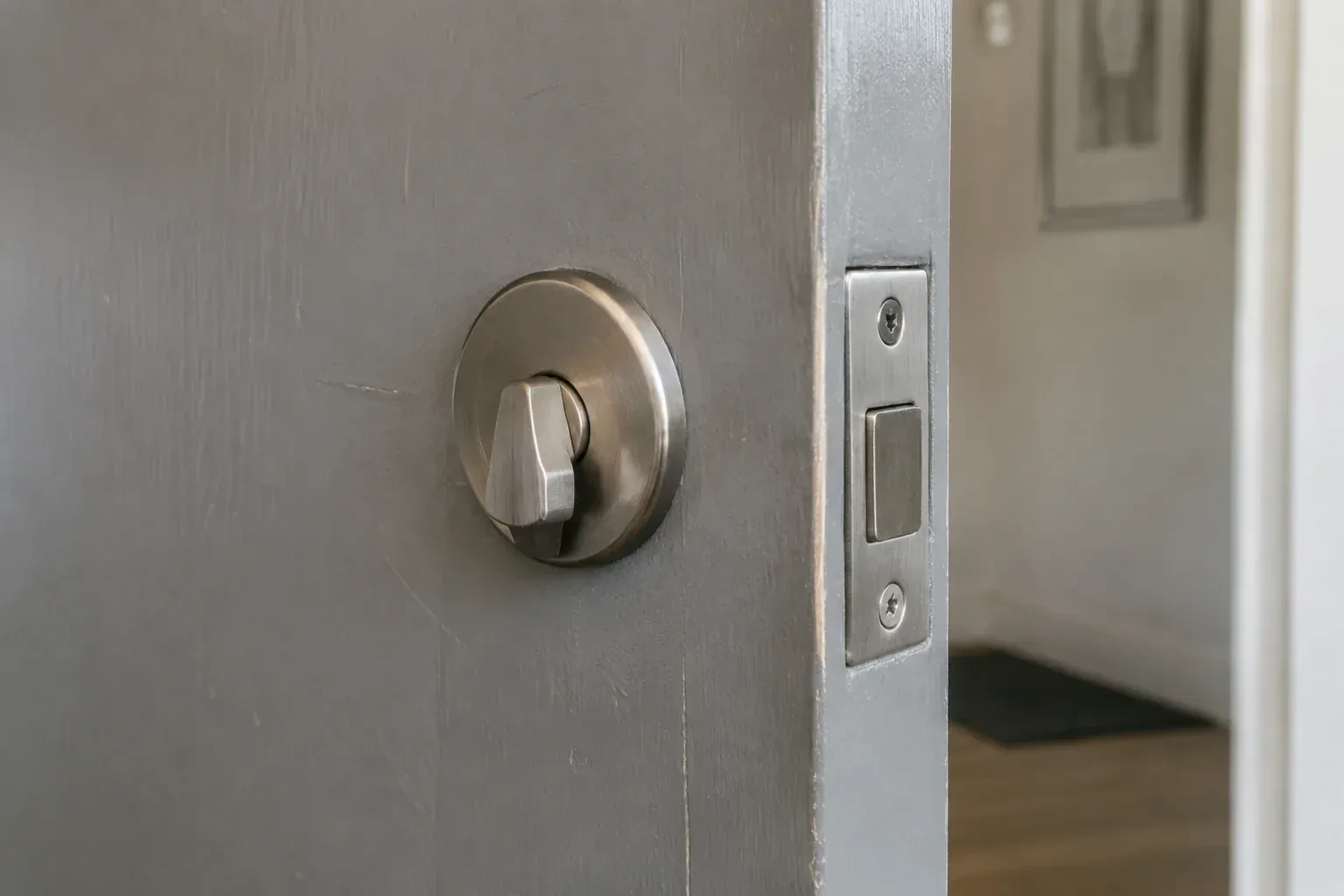
Close view of a satin-nickel deadbolt thumbturn and edge faceplate on a painted timber door. — Deadbolt Installation, Burlington

Change or rekey · Burlington

Deadbolt Installation

The door from the garage into the kitchen closes on a passage knob with no lock at all. Anyone who opens the garage is one turn of a handle from the house, and the insurance renewal form has a question about exactly that.
In plain words

For a main exit door the hardware choice has a safety side as well as a security side. A door people leave a home through should open from the inside without a key, so a single-cylinder deadbolt with an inside thumb-turn is the standard fit rather than a bolt keyed on both faces. Where glass sits close to the lock, the answer is a captive thumb-turn, laminated glass, or a tested security-film system with its specified frame attachment, not a key on the inside. The locksmith explains the trade-offs, fits the lock that keeps a stranger out and the family able to leave, and shows everyone the thumb-turn.

Sound familiar?Burlington

The call
The door from the garage into the kitchen closes on a passage knob with no lock at all. Anyone who opens the garage is one turn of a handle from the house, and the insurance renewal form has a question about exactly that.

NextHow the visit goes

Deadbolt Installation · Burlington

How the visit goes

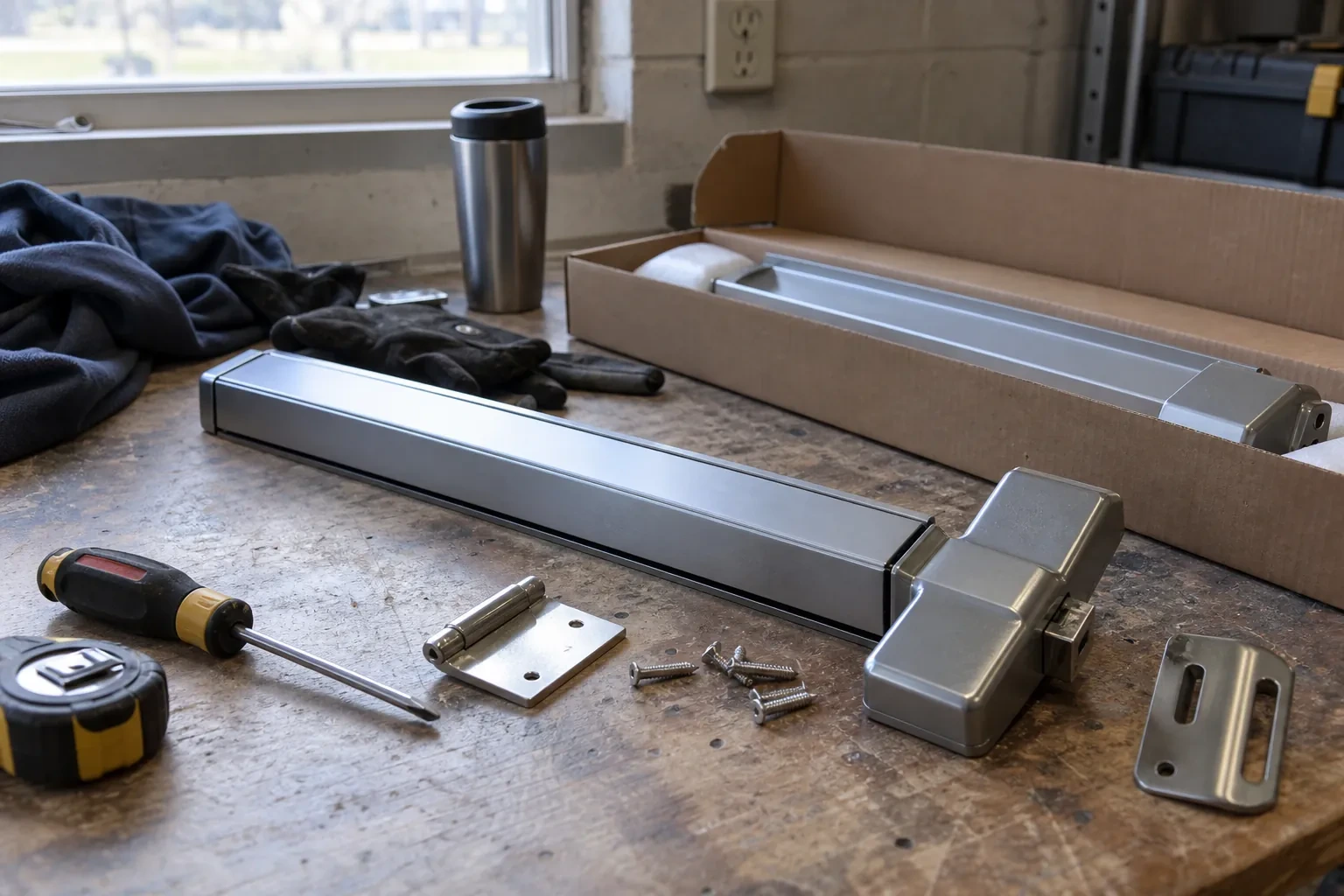
Steel push bar with a latch housing, hinge plate, screws, screwdriver and tape measure on a worn bench beside an open box.
  1. Scene 1

    Where the bolt should sit on the door

    On a door with no deadbolt yet, its height is not fixed by the manufacturer but by the door in front of you. The usual spot is 140 to 150 mm above the centre of the knob, which places the bolt near the strongest part of the lock stile and keeps both locks within one comfortable reach. The locksmith checks that this height misses any glass, decorative panel, hinge line or the wood block inside an insulated door, and that the frame behind that spot is solid rather than a gap between shims. If a storm door or screen door shares the opening, the bolt's thumb-turn and cylinder have to clear it as well.

  2. Scene 2

    Cutting a pocket the bolt can fill

    The strike is located from the bolt itself rather than from a measurement. The bolt tip is chalked, the door is closed and the bolt is thrown firmly against the jamb to leave a mark at the true centre. The locksmith bores the pocket there with a 25 mm bit to a depth of at least 28 mm, so a 25 mm bolt seats fully and reaches its deadlocked position instead of stopping short and feeling stiff. The pocket is checked with the bolt extended before any plate goes on, because a strike screwed over a shallow hole hides the fault until the first cold morning when the door has moved.

  3. Scene 3

    Looking after it through the seasons

    A deadbolt asks for very little, and most of it happens twice a year. In spring and again in autumn, throw the bolt with the door closed and notice whether it still slides in freely; wood doors swell in humid summers and shrink in dry winter air, and the first sign is a bolt that needs the door pulled before it will lock. If so, a small strike adjustment puts it right. Give the bolt and keyway a puff of whatever lubricant the lock's own maker specifies, often dry PTFE or graphite, since some cylinders are serviced with oil instead. Wipe salt off the outside trim after a slushy week so the finish stays bright.

In the van

  • Reinforced strike plate
  • Dry PTFE lubricant
  • Bolt faceplate or drive-in collar
  • 25 mm auger bit
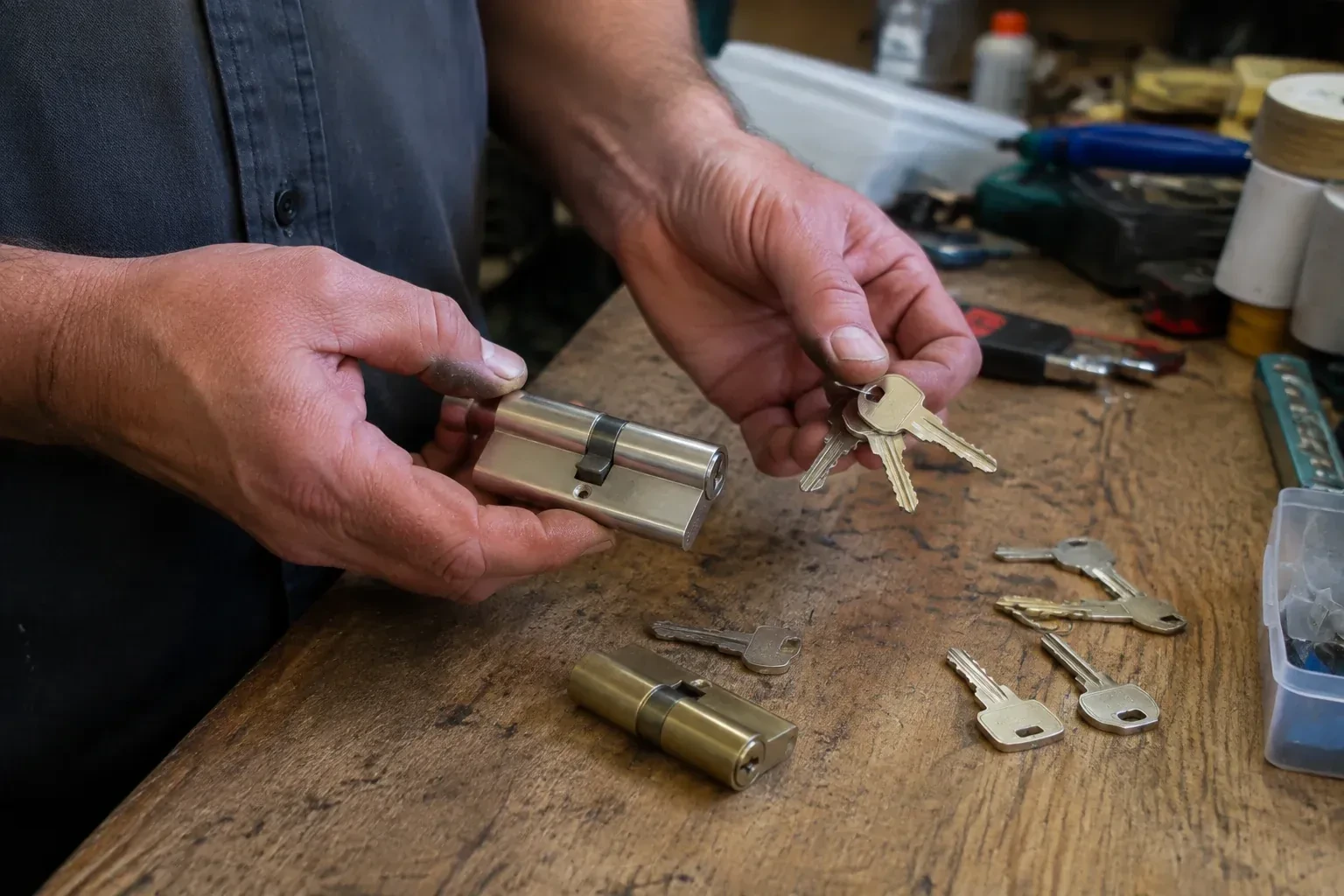
  • Rekeying pins and key blanks

What shapes the quoteElizabeth Gardens Locksmith Pros

Strike and frame reinforcement
A reinforced strike with long screws is standard; a full-length jamb reinforcer, a strike box or repairs to a split jamb after a forced entry are extra items quoted on their own.
Door and hinge corrections
A sagging door, loose hinge screws or thick weatherstrip are put right before a bolt is fitted, and that adjustment is quoted as its own line rather than folded into the lock.
New bore or replacement into existing holes
Boring a door that has never had a deadbolt takes more time and tooling than dropping a new bolt into holes that are already there, and the quote reflects which of the two your door needs.

FeesSame any hour

Have it ready

Before you call · 0 / 3

(289) 816-2265

Straight answers

Does the finish of the deadbolt matter beyond looks?

It does on an exposed door. Winter salt spray, summer sun and humid air all work on the outside trim, and residential deadbolts carry a finish grade that reflects how well the coating resists them. A lifetime or PVD-style finish stays bright longer on a south-facing or roadside door, while a sheltered porch door can carry any finish you like. Matching the knob or lever below is mostly a matter of taste.

The door has to be pulled before the old bolt will lock. Will a new one fix that?

The new bolt will only lock as smoothly as the door and frame let it, so the locksmith deals with the cause as part of the installation. A door that has sagged on loose hinges gets longer hinge screws or a shim, thick weatherstrip is trimmed, and the strike is set from the bolt's actual position with the door closed. The pocket is bored deep enough for a full throw. Afterwards the bolt should slide with fingertip effort.

Does a deadbolt work with a storm door or screen door?

It does, with one check: the thumb-turn and the outside cylinder have to clear the storm door when it closes. Most storm doors leave enough depth, but a low-profile deadbolt trim is chosen where the gap is tight. The storm door's own latch is separate and does not replace a bolt on the main door, since a screen frame gives little resistance on its own.

Burlingtoninformation

HaltonOntario

Town
Burlington, Halton
In business
32 years
Hours
Open 24/7
Nights, weekends and holidays, same fees
Visits
On-site assessment preferred. Request a visit or call.

2021 census: what it means at the door

Every square is one home in a hundred.

  • 47 in 100 homes · mixed ages
  • About 47% of homes in Burlington were built in 1980 or earlier, according to the 2021 Census.In an area where homes span several eras, one street may have original mortise locks and the next builder-grade cylinders. A locksmith working here carries parts for both, so whichever door he meets, the job finishes in one visit.
  • Single-detached houses make up about 50% of homes in Burlington (2021 Census).Where houses and attached homes share an area, lockouts are as varied as the doors. A porch, a hallway or a shared vestibule each calls for a slightly different approach, and a locksmith used to all three arrives ready for whichever it is.

Source: Statistics Canada, Census Profile

Open Burlington in Google Maps

On-site assessment

Request a visit.

The door from the garage into the kitchen closes on a passage knob with no lock at all.

(289) 816-2265, open 24/7.